
Bay & Bow Window Replacement in Dayton, OH
A bay or bow window is a small addition, not just a window. Here is what replacement costs, where the price goes, and how to compare quotes from independent installers.
Get a Free Quote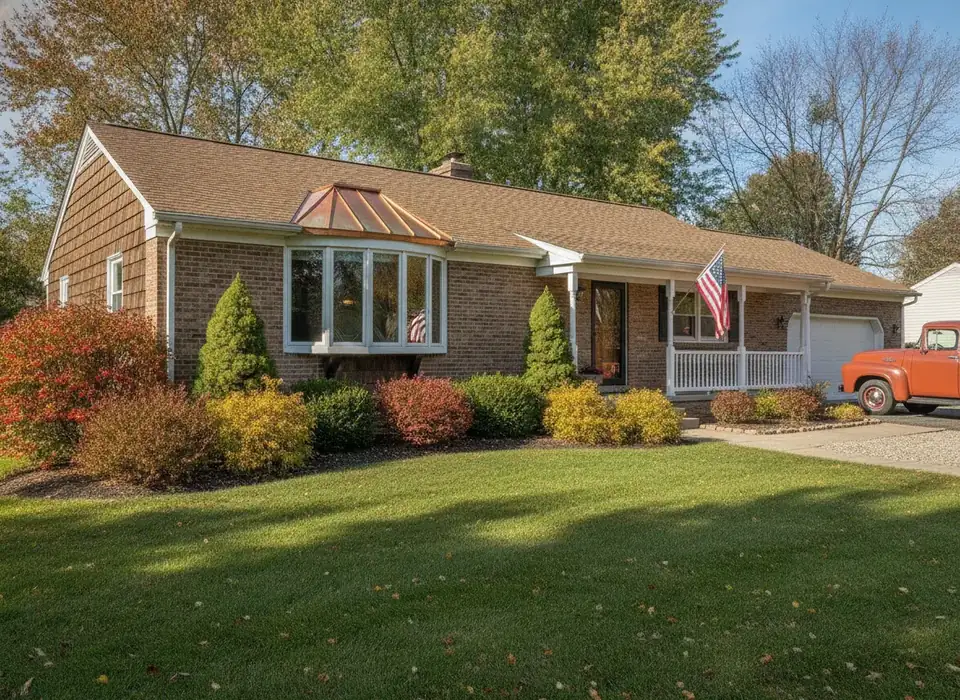
What bay and bow windows are
A bay window projects out from the wall, usually with three units: a large center window flanked by two angled side windows, often at 30 or 45 degrees. A bow window uses four or more equal-width units set in a gentle curve. Both create a ledge or seat inside and need a small roof or cap outside.
They are common on the front of mid-century ranches and two-stories across Kettering, Huber Heights and Beavercreek. Many of those units are now 40 to 60 years old. Owners usually call when the seat board feels cold, the head board sags, or water stains appear below the window.
Dayton Window Replacement Pros is a free matching service, not a window company. You describe the bay once, and independent local installers reply with quotes.
How installers replace a bay or bow
Because the unit hangs off the house, there is more to it than swapping glass.
Inspect the structure
The installer checks the header over the opening, the floor framing or knee braces below, and any cable supports. Sagging often traces back to failed supports, not the window itself.
Order the unit
Projection, angle, number of units and seat and head boards are specified. Bay and bow units are built to order.
Remove and support
The old unit comes out, often in one piece, while the opening is braced. Rot in the sill plate or seat platform gets repaired.
Install, insulate, roof
The new unit is hung with cables or brackets, insulated beneath the seat and above the head board, then roofed or capped and flashed into the wall.
Finish inside
Interior trim and the seat surface are installed. Ask who paints or stains.
Bay window replacement cost
Bay and bow windows sit at the top of most window budgets. The window itself is larger and built to order, and the labor includes structure, roofing and insulation.
| Item | Typical range | Source |
|---|---|---|
| Bay window | $900–$4,500 | Fixr, Jan 2026 |
| Bow window | $1,500–$8,000 | Fixr, Jan 2026 |
| Installation labor | $150–$300 per standard window (up to $800 bay/bow) | Fixr, Jan 2026 |
| Picture window (if you flatten the opening) | $300–$1,600 | Fixr, Jan 2026 |
Typical published ranges, not quotes (Modernize Aug 2026, Fixr Jan 2026, EcoWatch Jan 2025). Dayton installers' quotes vary.
What pushes a quote up:
- Bow instead of bay (more units, curved framing)
- Wood or clad-wood instead of vinyl
- A new standing-seam or copper roof instead of a shingle tie-in
- Rot in the seat platform, sill plate or wall below
- Second-floor location and scaffolding
- Lead-safe work practices on a pre-1978 home
Use the bay/bow option in the Dayton cost calculator to see it in a whole-house total.
Dayton specifics: snow, structure, permits and lead
Dayton averages about 25 inches of snow a year in NOAA's 1991–2020 normals, and the roof over a bay collects snow and meltwater right where it meets the wall. Flashing at that joint is the most common leak point. Ask each installer how they flash and tie the bay roof into your siding or brick.
The seat and head boards are also where a bay loses heat. Older units often have little or no insulation there. A replacement is the chance to insulate both.
On permits: Same-size replacements usually don't need a building permit, but changing an opening or adding or altering an egress window does, and historic-district homes need a Certificate of Appropriateness. Your installer should confirm with your building department. Replacing a bay with a bay of the same size is usually treated differently from turning a flat window into a projecting bay, which changes the opening and the structure. In Dayton's local historic districts, changes to window openings go to the Landmark Commission for a major Certificate of Appropriateness.
On lead: If your home was built before 1978, federal law requires the installer to be an EPA Lead-Safe Certified Firm. Window replacement does not count as a minor repair under the EPA rule, so the small-job exemption does not apply.
Pros, cons and when to skip a bay
Pros: more light from three directions; extra floor or seat space; a strong curb-appeal feature.
Cons: high cost; more places to leak; heat loss through the seat and roof if poorly insulated.
Consider flattening the opening into a picture window with casement flankers if the bay leaks, sits under a deep porch roof, or faces a street where the projection adds little. Flattening is still an opening change, so expect permit and, in historic districts, review questions.
Questions to ask installers
- Is the sag in my current bay a support problem, and does your price include fixing it?
- How will the new roof be flashed into my wall?
- Will you insulate the seat and head boards?
- Is this a bay or a bow, and how many units and what projection?
- Can I see proof of insurance and, for a pre-1978 home, the EPA Lead-Safe Certified Firm certificate?
- Who handles any permit?
Ohio has no statewide license for residential window installers, so ask each company for proof of insurance, EPA Lead-Safe Certified Firm status for pre-1978 homes, and any local registration your city requires. Dayton Window Replacement Pros does not verify licenses or insurance.
Signing at the kitchen table?
If you sign at home, Ohio law (ORC 1345.22) and the FTC Cooling-Off Rule generally give you until midnight of the third business day to cancel in writing. A price that is only good "if you sign today" is a red flag, not a deal. Take the quote, compare it with others, and decide on your schedule.
Bay & Bow Windows FAQ
How much does bay window replacement cost?
Fixr's January 2026 data lists bay windows at about $900 to $4,500 and bow windows at about $1,500 to $8,000, with labor up to about $800 for large bay or bow units. Material, size, roofing and any rot or structural repair move the final price. Get written quotes from more than one installer.
What is the difference between a bay and a bow window?
A bay usually has three units, a large center window with two angled sides. A bow uses four or more equal units in a gentle curve. Bows typically cost more because they have more units and more complex framing.
Why is my bay window sagging?
Sagging usually means the support system, such as cables, brackets or knee braces, has failed or the framing below has rotted. It is not always the window itself. An installer should inspect the structure before quoting, and the fix should be spelled out in the written quote.
Do I need a permit to replace a bay window in Dayton?
Same-size replacement of an existing bay is often handled as a replacement, but adding a bay where there was a flat window changes the opening and the structure, which typically needs approval. Historic-district homes need a Certificate of Appropriateness. Your installer should confirm with the building department.
Can I replace a bay window with a flat window?
Yes. Many owners swap a leaky bay for a picture window flanked by casements. The wall below and above has to be framed in and finished outside, so the job includes carpentry and siding or brick work, and it may need a permit.
Get free bay and bow window quotes
Tell us whether it is a bay or bow, which floor it is on and any leaks or sagging. Independent local installers reply with no-obligation quotes.
Drafty, foggy or stuck windows? Get free quotes.
Describe your windows once and independent Dayton-area installers can reply with no-obligation quotes.