
Egress & Basement Windows in Dayton, OH
Finishing a basement bedroom, or just replacing leaky basement windows? Here is what an egress window involves, what it costs and what permit questions to expect.
Get a Free Quote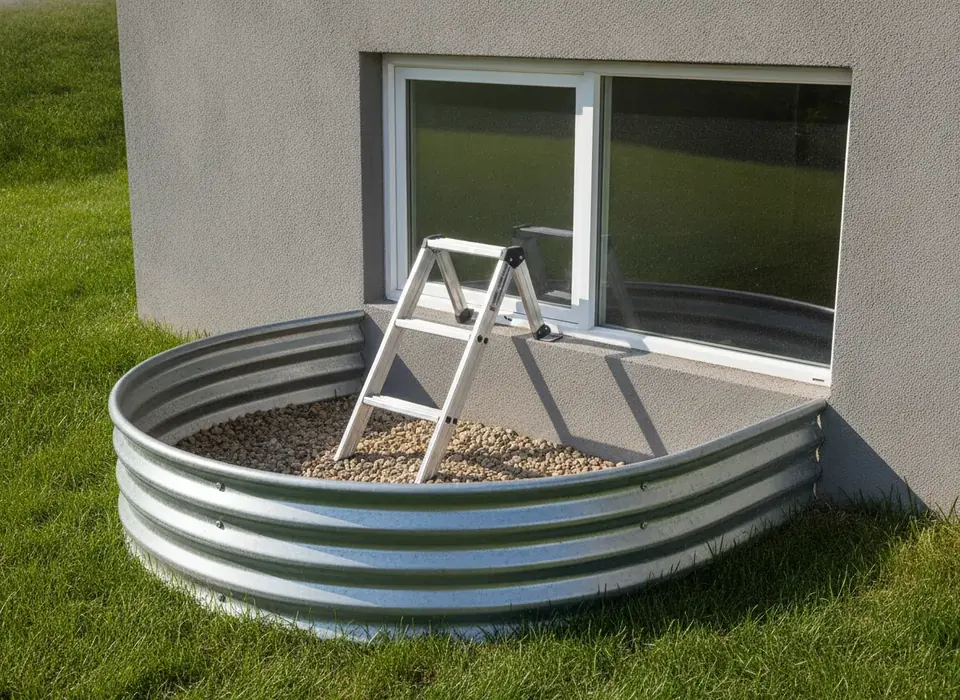
What an egress window is, and when you need one
An egress window is a window large enough, and low enough, for a person to climb out in an emergency and for a firefighter to climb in. Building codes generally require one in every sleeping room, including a basement bedroom, and in many finished basements.
The model code that most U.S. residential codes follow sets these minimums: a net clear opening of 5.7 square feet (5.0 for a window at grade), at least 24 inches of clear height and 20 inches of clear width, and a sill no more than 44 inches above the floor. A window well in front of a below-grade egress window needs at least 9 square feet of area with no side shorter than 36 inches. Ohio's residential code is built on that model code, but confirm the current requirements with your building department, since local amendments and code editions change.
Plain basement window replacement is a different, simpler job: swapping old steel or single-pane hopper windows for new units in the same openings. Dayton Window Replacement Pros is a free matching service, not a window company. Independent installers quote both kinds of work.
How installers handle a new egress opening
Cutting a foundation is structural work. Ask each company to describe its method in writing.
Plan and permit
The installer confirms size, location, utilities and drainage, and checks permit needs with the building department.
Excavate
Soil outside the wall is dug out for the window well, usually by machine where access allows.
Cut the wall
A concrete or block foundation is saw-cut to the new size. Block walls may need the cores filled; a header or lintel may be required over the opening.
Install window and well
The window is set in a buck, sealed and flashed. The well is anchored, gravel is added for drainage and a ladder or steps go in where the depth calls for them.
Finish and inspect
Interior returns are finished and any required inspection is scheduled.
Egress window cost
The window is the smaller part of the bill. Excavation, cutting the foundation, the well, drainage and finishing add the rest, which is why quotes vary so much.
| Item | Typical range | Source |
|---|---|---|
| Egress window (window only; well/excavation extra) | $300–$1,500 | Fixr, Jan 2026 |
| Casement window, for comparison | $400–$1,200 | Fixr, Jan 2026 |
| Sliding window, for comparison | $700–$1,500 | Fixr, Jan 2026 |
| Installation labor (standard window replacement) | $150–$300 per standard window | Fixr, Jan 2026 |
Typical published ranges, not quotes (Modernize Aug 2026, Fixr Jan 2026, EcoWatch Jan 2025). Dayton installers' quotes vary.
Get every quote to break out the window, excavation, wall cutting, the well and cover, drainage, permit fees and interior finishing. Casements are a common choice for egress because they open fully; sliders need a larger frame to reach the same clear opening. See casement and sliding windows.
Dayton specifics
Permits. Same-size replacements usually don't need a building permit, but changing an opening or adding or altering an egress window does, and historic-district homes need a Certificate of Appropriateness. Your installer should confirm with your building department. Ohio's residential code says "minor repairs" without a permit cannot include cutting away any wall or changing a required means of egress, so a new egress opening is the kind of work that normally needs approval. In the City of Dayton, your installer can confirm with Building Inspection; Kettering runs its own residential permits; and Montgomery County Building Regulations covers townships such as Washington Township. Greene County towns have their own offices.
Water and frost. Dayton gets about 41 inches of precipitation and around 110 freezing nights a year. A well without a drain or gravel base can fill and freeze against the glass. Ask how the well drains and whether a cover is included.
Older basements. Much of Dayton's housing predates 1960, and many basements have small steel or wood windows. If your home was built before 1978, federal law requires the installer to be an EPA Lead-Safe Certified Firm. Window replacement does not count as a minor repair under the EPA rule, so the small-job exemption does not apply. Basement window trim is often painted too.
Housing mix. Postwar suburbs such as Kettering, where nearly half the homes predate 1960, have many unfinished basements now being finished as bedrooms or offices. That is when egress comes up.
When an egress window isn't the right fix
- If you only need light and air, replacing the existing basement windows in their openings costs far less.
- If the basement takes on water, fix grading and drainage before you cut a hole below grade.
- If the room will not be used for sleeping, ask the building department whether egress is required at all.
Questions to ask installers
- Who pulls the permit and schedules inspections?
- What clear opening will the finished window give?
- How will the well drain, and is a cover included?
- Will you call to locate utilities before digging?
- Is a header or lintel needed, and is it in the price?
- Can I see proof of insurance?
Ohio has no statewide license for residential window installers, so ask each company for proof of insurance, EPA Lead-Safe Certified Firm status for pre-1978 homes, and any local registration your city requires. Dayton Window Replacement Pros does not verify licenses or insurance.
Not sure how to compare bids? Read how to compare window replacement quotes.
Egress & Basement Windows FAQ
How much does an egress window cost?
Fixr's January 2026 data puts the egress window alone at about $300 to $1,500. Excavation, cutting the foundation, the window well, drainage and interior finishing are extra and often cost more than the window. Ask each installer to break out every line so you can compare.
What size does an egress window need to be?
The model residential code sets a minimum net clear opening of 5.7 square feet (5.0 at grade), at least 24 inches high and 20 inches wide, with the sill no more than 44 inches above the floor. Confirm current requirements with your building department before ordering.
Do I need a permit for an egress window in Dayton?
Very likely. Ohio's residential code does not treat cutting a wall or changing a means of egress as a minor repair, so adding or enlarging an egress opening typically needs approval. Your installer should confirm with the City of Dayton, your city, or Montgomery or Greene County building regulations.
Can I just replace my old basement windows?
Yes. If you are not adding a bedroom, replacing existing basement windows in the same openings is usually a straightforward job. Many owners choose vinyl hopper or slider units. Lead-safe rules still apply to pre-1978 homes if painted surfaces are disturbed.
Get free egress and basement window quotes
Tell us whether you need a new egress opening or replacement basement windows, and what the wall is made of. Independent local installers reply with no-obligation quotes.
Drafty, foggy or stuck windows? Get free quotes.
Describe your windows once and independent Dayton-area installers can reply with no-obligation quotes.